Step 7 · Scholars · Ages 10–13 · 14–17
Model UN Chairing and Leadership Course
The honors capstone: run committees instead of sitting in them.
- The ladder
- 1. Beginner I
- ·2. Beginner II
- ·3. Intermediate I
- ·4. Intermediate II
- ·5. Advanced I
- ·6. Advanced II
- ·7. Scholars
About this program
Scholars is the top of the ladder, and it faces the other way. Instead of training students to compete in committees, it trains them to run them: chairing from the dais, writing the background guide, judging the room, directing the crisis backroom, and coaching younger delegates. The craft is taught by coaches who have done these jobs at a high level, from chairing on the international circuit to adjudicating at world-level tournaments. Every Scholar writes a full background guide across the term, chairs scored practice sessions, and helps design and run the capstone simulation. Admission is by completion of Advanced II or by application, and students leave with the two things secretariat applications actually ask for: evidence they can chair, and writing that proves it.
Is this the right fit?
- Who it's for
- Advanced II graduates ready to run committees rather than sit in them · Experienced delegates applying for chairing and secretariat roles · Older students who want leadership experience with something to show for it
- Prerequisites
- Completion of Advanced II, or admission by application for experienced delegates from outside the ladder.
Class schedule
Each course offers a Middle School and a High School band, and every band has two weekly slot options, all on weekends. The schedule below displays in your own timezone automatically; the selector lets you view a different one.
Middle School
Ages 10–13One 1.5-hour class per week, 12 weeks
Option SCHOLARS-MS-AMDXB · Americas + Dubai
Sundays
11:30 AM – 1:00 PM EDT
Option SCHOLARS-MS-ASIADXB · Asia + Dubai
Sundays
6:30 AM – 8:00 AM EDT
High School
Ages 14–17One 2-hour class per week, 12 weeks
Option SCHOLARS-HS-AMDXB · Americas + Dubai
Sundays
11:00 AM – 1:00 PM EDT
Option SCHOLARS-HS-ASIADXB · Asia + Dubai
Sundays
6:00 AM – 8:00 AM EDT
What students achieve
- ✓Chair a committee: rulings, pace, and presence from the dais
- ✓Write a conference-standard background guide
- ✓Judge a room: track delegates, rank them, and defend an award slate
- ✓Direct crisis from the backroom: updates, notes, and arcs
- ✓Coach a junior delegate with feedback that changes the next speech
- ✓Leave with a portfolio: a finished guide and scored chairing experience to show secretariats
What a session looks like
Every class runs the same loop, so students always know the shape of the session.
- 0:00
Dais briefing
The week’s scenario from the staff side: what the committee is, and what the dais needs to make happen.
- 0:15
Craft lesson
Chairing technique, guide writing, judging, or crisis direction, taught by coaches who have done the job.
- 0:45
Practice block
Scholars chair, write, or direct live while the coach observes from the floor.
- 1:30
Score and feedback lab
Tracking sheets compared, rankings defended, and feedback drafted the way a real dais would write it.
- 1:50
Coach’s notes
Individual written direction for each Scholar’s guide, chairing, and next week’s brief.
Curriculum
01The view from the dais
What the dais actually does: the chair, the director, the rapporteur, and the difference between a committee that runs and one that drags.
02Rules mastery
Procedure from the chair’s side: ruling on points and motions, order of precedence, and the edge cases delegates will test you with.
03The chairing voice
Script, pace, and fairness: keeping a room moving, handling the delegate who will not stop talking, and staying neutral while staying in charge.
04Practice chairing I
Scholars chair short sessions of each other while the coach tracks rulings, pace, and presence, with written notes after.
05The background guide I
Choosing a topic that debates well, structuring a guide, and the research standard conference secretariats expect. Each Scholar starts a guide of their own.
06The background guide II
Writing the hard sections: the questions a resolution must answer, bloc positions, and sourcing. Guides develop across the rest of the term with coach edits.
07How judging works
Award decisions from the inside: rubrics, tracking sheets, and dais deliberations, and why the loudest delegate in the room is often not on the slate.
08Practice chairing II
Chairing with a scorer’s hat on: Scholars run a session, keep tracking sheets, rank the room, and defend their slate to the coach.
09Crisis direction
The backroom from the staff side: designing updates, answering notes, and steering arcs so every delegate has a story to play.
10Teaching the craft
How to coach a junior delegate: diagnosing what is actually wrong, giving feedback that changes the next speech, and running a drill.
11Capstone build
Scholars design the final simulation end to end: topic, background guide, dais script, and the update schedule.
12Capstone: Scholars in charge
Each Scholar chairs a segment of a full mock committee and writes delegate feedback, with the finished background guide as the term’s portfolio piece.
What's included
- ✓Twelve live seminar-style sessions with a senior coach
- ✓A finished, coach-edited background guide as a portfolio piece
- ✓Scored chairing practice with written reviews
- ✓Judging and rubric training from experienced chairs and adjudicators
- ✓A capstone simulation designed and run by the Scholars themselves
- ✓A written final assessment covering chairing, writing, and judging
Who teaches it
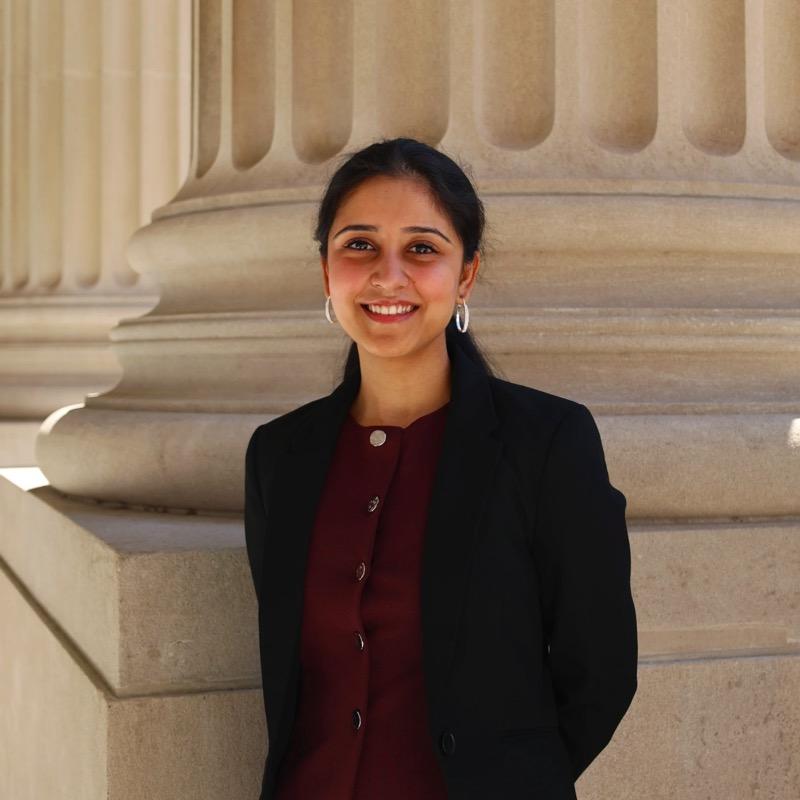
Netra Easwaran · Model UN Coach
Director-General, Yale Model United Nations
Meet the full coaching team on the coaches section.
How enrollment works
- 1
Enroll and pay
Secure checkout takes a minute. Pick the age band and time slot, enter each student’s details, and pay for the term.
- 2
We reach out in 24-48 hours
A coach contacts you to welcome the student, confirm the band and time slot, and answer any questions.
- 3
Placement and first session
We place the student in the right class and send the class link and materials before the first meeting.
Frequently asked questions
How does admission to Scholars work?+
Completing Advanced II qualifies a student automatically. Experienced delegates from outside the ladder can apply instead: a short written application plus a conversation with a coach. Once admitted, Scholars enrolls like any other course at standard term pricing.
Will this course get my child a chairing position at a conference?+
We cannot appoint anyone to a dais; conferences select their own secretariats. What Scholars provides is exactly what those applications ask for: real scored chairing experience and a finished background guide, plus coaches who know what selection committees look for.
Is Scholars worth it for a student who already chairs at school?+
Yes, because school chairing usually stops at running procedure. Scholars adds the layers around it: judging and award deliberation, background-guide writing to a conference standard, crisis direction, and coaching, which is the full dais skill set rather than one slice of it.
Is there a Middle School track for Scholars?+
Both tracks are offered, though most Scholars are older students, since the prerequisite is Advanced II or equivalent experience. A younger delegate who has genuinely climbed the ladder is welcome, and placement is confirmed with a coach at admission.
What does a Scholar actually leave the course with?+
A finished, coach-edited background guide, written reviews of their scored chairing sessions, judging training, and a final written assessment. Together that is a concrete portfolio for secretariat applications, school leadership roles, and eventually college essays that have something real to describe.