Step 6 · Advanced · Ages 10–13 · 14–17
Advanced Model United Nations Training: Security Council and Joint Crisis
Security Council, historical committees, and joint crisis: the hardest rooms on the circuit.
- The ladder
- 1. Beginner I
- ·2. Beginner II
- ·3. Intermediate I
- ·4. Intermediate II
- ·5. Advanced I
- ·6. Advanced II
- ·7. Scholars
About this program
Advanced II is built for the committees that top conferences reserve for their strongest delegates. The term works through the formats one by one: the Security Council, where fifteen seats and five vetoes change every calculation; historical committees, where the research has to be period-accurate; joint crisis, where two rooms fight one war through a shared backroom; and press corps, where a published article can move a committee faster than a speech. Simulations run at flagship pace with no scaffolding, and the capstone is built like a top-conference committee, application-style character brief included. Graduates who want to move from competing in committees to running them apply to Delegate Academy Scholars.
Is this the right fit?
- Who it's for
- Advanced I graduates ready for the Security Council and joint crisis · Delegates preparing for flagship conferences and application-based committees · Students who want range across council, historical, joint crisis, and press formats
- Prerequisites
- Advanced I, or prior crisis-committee experience at real conferences.
- Where it leads
- Graduates step up to Delegate Academy Scholars.
Class schedule
Each course offers a Middle School and a High School band, and every band has two weekly slot options, all on weekends. The schedule below displays in your own timezone automatically; the selector lets you view a different one.
Middle School
Ages 10–13One 1.5-hour class per week, 12 weeks
Option ADVANCED-II-MS-AMDXB · Americas + Dubai
Sundays
11:00 AM – 12:30 PM EDT
Option ADVANCED-II-MS-ASIADXB · Asia + Dubai
Sundays
6:00 AM – 7:30 AM EDT
High School
Ages 14–17One 2-hour class per week, 12 weeks
Option ADVANCED-II-HS-AMDXB · Americas + Dubai
Sundays
11:30 AM – 1:30 PM EDT
Option ADVANCED-II-HS-ASIADXB · Asia + Dubai
Sundays
6:30 AM – 8:30 AM EDT
What students achieve
- ✓Operate in the Security Council: veto leverage, P5 play, and elected-member coalitions
- ✓Compete in historical committees with period-accurate positions
- ✓Run a cabinet in joint crisis, coordinating war and diplomacy across two rooms
- ✓Use press corps and specialized formats instead of being used by them
- ✓Adapt style between General Assembly, council, and crisis rooms
- ✓Handle application-style character briefs and no-paper crisis starts
What a session looks like
Every class runs the same loop, so students always know the shape of the session.
- 0:00
Committee brief
The coach sets the week’s format and scenario: council, historical, joint crisis, or press.
- 0:15
Format focus
The mechanics that make this room different, taught through real committee examples.
- 0:45
Live simulation
A full simulation block in the week’s format, run at flagship pace.
- 1:40
Debrief: arcs and verdicts
The coach walks the vetoes, mergers, and backroom moves that decided the session, with a written note per student.
Curriculum
01The Security Council
Fifteen members, five vetoes, binding resolutions: how the UN’s most powerful body works, and how its Model UN version differs from a General Assembly room.
02Playing the P5
Veto leverage: when to threaten it, when to spend it, and how to draft language a rival permanent member can live with.
03Playing the elected ten
Small states with real leverage: swing votes, coalitions among the elected members, and forcing the P5 to negotiate.
04Simulation: Security Council
A full council session on a security topic, with vetoes in play and a presidential statement as the fallback when a resolution dies.
05Historical committees
Researching a room set in 1919 or 1962: period-accurate positions, counterfactual discipline, and using hindsight without breaking the simulation.
06Joint crisis
Two rooms, one war: how a JCC works, communication between cabinets, and fighting on a front while the real battle is in the other room.
07Simulation: joint crisis
A JCC-style session with the cohort split into two cabinets, run against each other through a shared coach-directed backroom.
08Press corps and specialized formats
The committees that break the mold: press delegates who move committees with published articles, regional bodies, and single-country cabinets.
09The flagship room
What the hardest committees at major conferences expect: application essays, no-paper crisis starts, and rooms full of delegates as prepared as you are.
10Style, adapted
Reading a room and adjusting: a two-hundred-seat assembly versus a fifteen-seat council, frontroom-heavy versus backroom-heavy, and choosing committees that fit your strengths.
11Simulation: the hard room
A full-length advanced simulation, Security Council or crisis by cohort vote, run at flagship pace with no scaffolding.
12Capstone: flagship rehearsal
A final simulation built like a top-conference committee, with an application-style character brief beforehand and a written debrief for every delegate after.
What's included
- ✓Twelve live sessions with a crisis-experienced coach
- ✓Security Council, historical, and joint crisis simulations
- ✓An application-style character brief for the capstone
- ✓Written debriefs after every simulation
- ✓A committee-selection consult for the student’s next real conference
- ✓Access to our full library of printable Model UN resources
Who teaches it
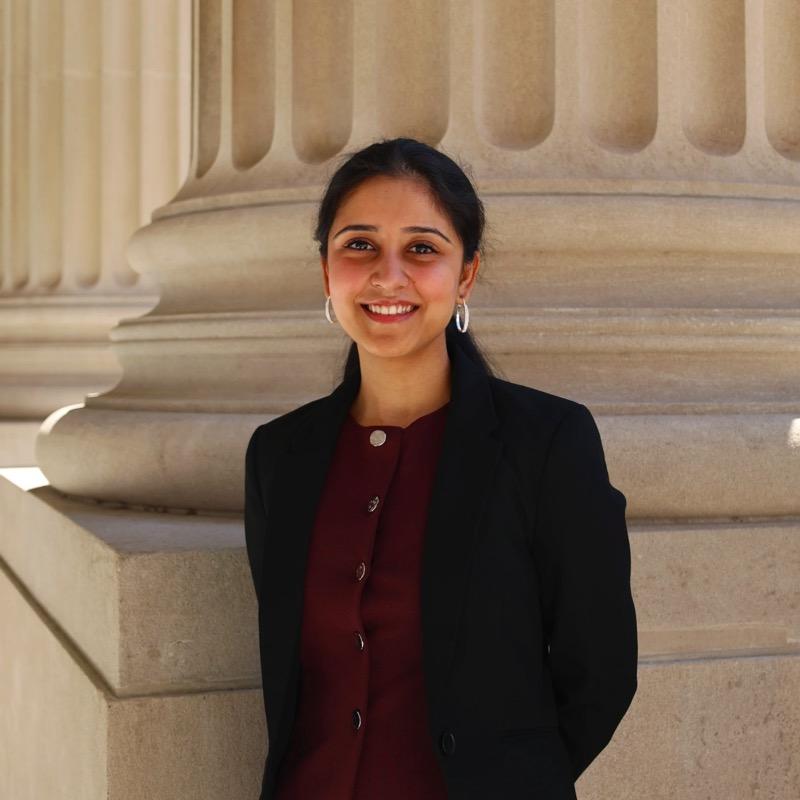
Netra Easwaran · Model UN Coach
Director-General, Yale Model United Nations
Meet the full coaching team on the coaches section.
How enrollment works
- 1
Enroll and pay
Secure checkout takes a minute. Pick the age band and time slot, enter each student’s details, and pay for the term.
- 2
We reach out in 24-48 hours
A coach contacts you to welcome the student, confirm the band and time slot, and answer any questions.
- 3
Placement and first session
We place the student in the right class and send the class link and materials before the first meeting.
Frequently asked questions
How is Advanced II different from Advanced I?+
Advanced I builds the core crisis toolkit: notes, directives, portfolio play, arcs. Advanced II applies that toolkit across the specialized formats, Security Council, historical, joint crisis, and press corps, each with mechanics of its own, and runs everything at flagship pace without scaffolding.
Which conferences is this course aimed at?+
The hardest committees anywhere delegates compete: the kind of council and crisis rooms run at flagship conferences like Harvard Model United Nations or THIMUN. We prepare delegates for those rooms; we are not affiliated with any conference.
How does a joint crisis work with one class group?+
The cohort splits into two cabinets in separate video rooms, each pursuing its own objectives, while the coach runs a shared backroom that feeds updates to both. Each side feels the other only through consequences, which is exactly what makes JCC formats work.
Do simulations use real ongoing conflicts?+
Scenarios lean historical and hypothetical. Where current issues appear, they are treated the way good conferences treat them: as policy problems, handled with judgment, not as spectacle.
What comes after Advanced II?+
Delegate Academy Scholars, the leadership capstone. Advanced II graduates qualify automatically, and the focus shifts from competing in committees to chairing, judging, and running them.