Step 5 · Advanced · Ages 10–13 · 14–17
Model UN Crisis Committee Training
Crisis committees from the ground up, drilled at real crisis pace.
- The ladder
- 1. Beginner I
- ·2. Beginner II
- ·3. Intermediate I
- ·4. Intermediate II
- ·5. Advanced I
- ·6. Advanced II
- ·7. Scholars
About this program
Crisis committees are a different sport. The room is small, the situation updates every few minutes, and the delegates who thrive are the ones who can plan three moves ahead while reacting in real time. Advanced I teaches that game from the ground up: crisis notes the backroom can act on, directives that pass, portfolio powers played to their edge, and character arcs that hold together across a whole session. Simulations run with a coach-directed backroom, scaffolded at first, then at full speed with live updates. The capstone is a complete crisis arc, planned and executed across a full-length simulation. Advanced II then takes those skills into the Security Council, historical committees, and joint crisis.
Is this the right fit?
- Who it's for
- Experienced General Assembly delegates moving into crisis committees · Intermediate II graduates ready for a faster format · Students targeting the crisis rooms where the biggest conferences concentrate their talent
- Prerequisites
- Intermediate II, or two or more conferences of experience in mainstream committees.
- Where it leads
- Graduates step up to Model UN Advanced II.
Class schedule
Each course offers a Middle School and a High School band, and every band has two weekly slot options, all on weekends. The schedule below displays in your own timezone automatically; the selector lets you view a different one.
Middle School
Ages 10–13One 1.5-hour class per week, 12 weeks
Option ADVANCED-I-MS-AMDXB · Americas + Dubai
Saturdays
11:00 AM – 12:30 PM EDT
Option ADVANCED-I-MS-ASIADXB · Asia + Dubai
Saturdays
6:00 AM – 7:30 AM EDT
High School
Ages 14–17One 2-hour class per week, 12 weeks
Option ADVANCED-I-HS-AMDXB · Americas + Dubai
Saturdays
11:30 AM – 1:30 PM EDT
Option ADVANCED-I-HS-ASIADXB · Asia + Dubai
Saturdays
6:30 AM – 8:30 AM EDT
What students achieve
- ✓Write crisis notes the backroom can act on immediately
- ✓Draft directives that pass: individual, joint, and committee
- ✓Play a portfolio: use a character’s powers to their edge and stay in role
- ✓Plan a multi-update arc and adapt it when the crisis turns
- ✓Hold the frontroom while running a backroom scheme
- ✓Execute a complete crisis arc across a full-length simulation
What a session looks like
Every class runs the same loop, so students always know the shape of the session.
- 0:00
Situation brief
The coach sets the crisis and the committee’s starting position for the session.
- 0:15
Crisis craft
A targeted lesson: note writing, directive structure, or arc planning for the week.
- 0:45
Live simulation
A fast, updating crisis round with a coach-run backroom, applying the skill under real pressure.
- 1:40
Backroom review
The coach reveals what the notes set in motion, which directives passed, and what each student should sharpen.
Curriculum
01How crisis works
Frontroom, backroom, and the update cycle that drives both. Why crisis rewards a different kind of delegate than a General Assembly ever will.
02Your portfolio
Reading a character dossier, mapping portfolio powers, and finding the gap between what your character can officially do and what they can get away with.
03Crisis notes
The private note that runs the backroom: who acts, what they do, and with what resources. Specific enough to execute, short enough to answer fast.
04Directives that pass
Individual, joint, and committee directives: structure, coalition math, and the specificity that separates passed from ignored.
05Arc planning
The three-update scheme: laying groundwork the room will not notice until it pays off, with contingencies for when the crisis staff pushes back.
06Frontroom presence
Speaking in crisis: thirty-second interventions, reacting to updates in real time, and staying in character while doing both.
07Simulation: first crisis
A scaffolded crisis session. The coach directs the backroom, pauses where useful, and shows students exactly what their notes set in motion.
08Reacting to updates
Triage under pressure: what an update changes, what it does not, and how to re-plan in five minutes without abandoning the arc.
09Allies and betrayals
Joint directives, trust as a resource, and the timing of a break: too early wastes it, too late and someone else moves first.
10Working the backroom
Escalation and follow-through: writing notes the crisis staff wants to reward, with clear stakes, real consequences, and room for the story to grow.
11Simulation: sustained crisis
A full-length session with live updates and no pauses. Students run competing arcs while holding the frontroom.
12Capstone: the full arc
A committee-length crisis where every student plans and executes a complete arc. The backroom review afterward walks through what worked, what collapsed, and why.
What's included
- ✓Twelve live sessions with a crisis-experienced coach
- ✓Live, updating crisis simulations with a coach-run backroom
- ✓Line edits on crisis notes and directives
- ✓A character dossier for every simulation
- ✓A capstone crisis arc with a written backroom review
- ✓Written feedback after every session
Who teaches it
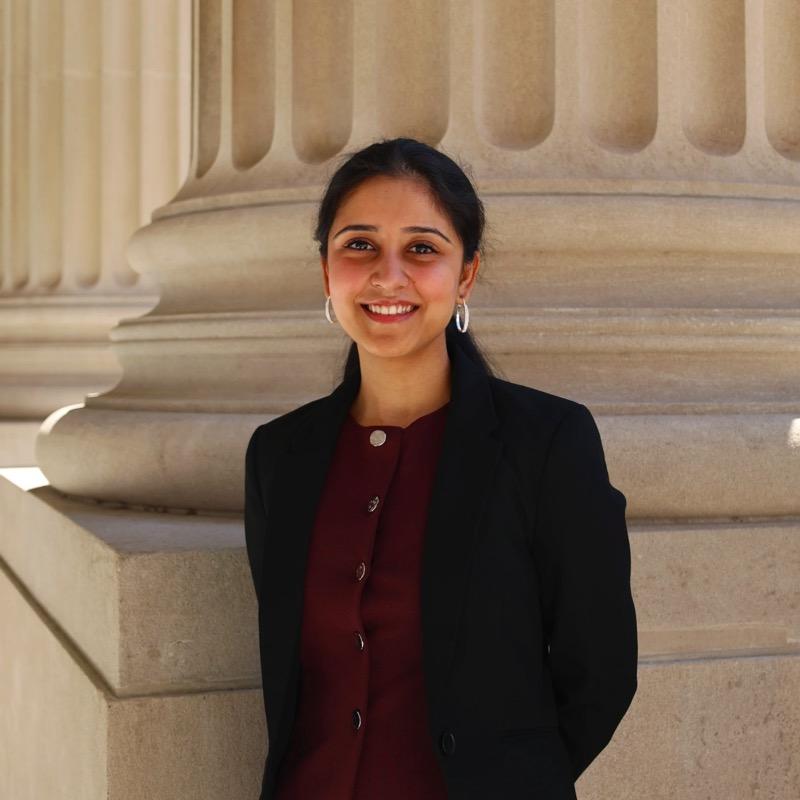
Netra Easwaran · Model UN Coach
Director-General, Yale Model United Nations
Meet the full coaching team on the coaches section.
How enrollment works
- 1
Enroll and pay
Secure checkout takes a minute. Pick the age band and time slot, enter each student’s details, and pay for the term.
- 2
We reach out in 24-48 hours
A coach contacts you to welcome the student, confirm the band and time slot, and answer any questions.
- 3
Placement and first session
We place the student in the right class and send the class link and materials before the first meeting.
Frequently asked questions
What exactly is a crisis committee?+
A small, fast committee where the scenario changes continuously. Instead of representing a country in a large assembly, each delegate plays a specific character, a minister, a general, an executive, with personal powers, and shapes an evolving situation through directives and private notes to a crisis staff. It is the format most experienced delegates consider the most demanding and the most fun.
Is crisis harder than General Assembly?+
It is different rather than strictly harder: fewer delegates, faster decisions, and continuous change instead of one long negotiation. It does assume committee experience, which is why the course sits at step five of the ladder.
My child has conference experience but has never done crisis. Do they start here or at Advanced II?+
Here. Advanced I builds the crisis mechanics, notes, directives, portfolio play, that Advanced II assumes. A GA-experienced delegate with no crisis background is exactly who Advanced I is for.
Are crisis scenarios appropriate for teenagers?+
Yes. Coaches choose historical and fictional scenarios with judgment, the same way reputable conferences do. The intellectual content is demanding, the framing is not gratuitous, and scenario difficulty is matched to the age band.
How does the backroom work in an online class?+
Notes and directives move through shared documents and private messages while committee runs on video, with the coach playing crisis staff. Online crisis actually mirrors the real thing closely, since even in-person conferences run their backrooms on paper and portals.