Step 3 · Intermediate · Ages 10–13 · 14–17
Model UN Negotiation and Bloc-Building Training
Stop surviving committee and start steering it.
- The ladder
- 1. Beginner I
- ·2. Beginner II
- ·3. Intermediate I
- ·4. Intermediate II
- ·5. Advanced I
- ·6. Advanced II
- ·7. Scholars
About this program
Most delegates learn to survive committee. Intermediate I teaches students to shape it. The course moves the work off the speakers’ list and into the places committees are really decided: the moderated caucus, the huddle during an unmod, the bloc forming around a working paper. Students learn to negotiate trades, recruit allies, hold a group together when rivals come poaching, and put their bloc’s ideas on paper fast enough to matter. The capstone asks each student to build a bloc from scratch and co-author a working paper that reaches the floor. The drafting and voting endgame that follows is Intermediate II’s territory, and this course points straight at it.
Is this the right fit?
- Who it's for
- Delegates comfortable with procedure who want to start steering committees · Students who speak well but leave conferences without influence · Beginner II graduates and delegates with one or two conferences of experience
- Prerequisites
- Beginner II, or roughly one to two conferences of experience with confident procedure.
- Where it leads
- Graduates step up to Model UN Intermediate II.
Class schedule
Each course offers a Middle School and a High School band, and every band has two weekly slot options, all on weekends. The schedule below displays in your own timezone automatically; the selector lets you view a different one.
Middle School
Ages 10–13One 1.5-hour class per week, 12 weeks
Option INTERMEDIATE-I-MS-AMDXB · Americas + Dubai
Saturdays
11:30 AM – 1:00 PM EDT
Option INTERMEDIATE-I-MS-ASIADXB · Asia + Dubai
Saturdays
6:30 AM – 8:00 AM EDT
High School
Ages 14–17One 2-hour class per week, 12 weeks
Option INTERMEDIATE-I-HS-AMDXB · Americas + Dubai
Saturdays
11:00 AM – 1:00 PM EDT
Option INTERMEDIATE-I-HS-ASIADXB · Asia + Dubai
Saturdays
6:00 AM – 8:00 AM EDT
What students achieve
- ✓Motion for, win, and use moderated caucuses to steer debate
- ✓Map a committee’s power structure inside the first unmoderated caucus
- ✓Negotiate trades that protect your country’s core interests
- ✓Build a bloc early and keep it together under pressure
- ✓Lead in committee without turning the room against you
- ✓Co-author a working paper and get it to the floor
What a session looks like
Every class runs the same loop, so students always know the shape of the session.
- 0:00
Caucus warm-up
A rapid moderated-caucus round on a familiar topic to get the room debating immediately.
- 0:15
Strategy lesson
The week’s focus: negotiation technique, bloc dynamics, or drafting process, with worked examples.
- 0:45
Negotiation lab
Structured exercises in pairs and blocs: trades, recruitment, merger talks, run against the clock.
- 1:15
Live caucus simulation
Moderated and unmoderated caucusing at real pace, applying the week’s skill in open committee.
- 1:45
What the coach saw
A strategy debrief: who built what, which trades worked, and each student’s note for next week.
Curriculum
01What shapes a committee
A diagnostic simulation, then the honest breakdown: the difference between delegates who attend committee and the handful who steer it.
02Moderated caucus, played well
Motioning for the caucus you want, getting recognized, and using forty-five seconds to move the debate instead of repeating it.
03The unmoderated caucus
The first unmod sets the committee’s power map. Where to stand, who to approach, and how to end up as the person holding the pen.
04Negotiation fundamentals
Interests versus positions, trades and concessions, and how to give ground on paper while keeping what your country actually needs.
05Building a bloc
Recruiting allies before anyone else starts counting names, dividing roles inside a bloc, and holding the group together when a rival comes poaching.
06Leading without the ego
Committees punish delegates who dominate. How to run a bloc so people want to stay in it, and how to share credit without losing it.
07The working paper
Turning a bloc’s ideas into a working paper: structure, division of labor, and drafting at speed during unmoderated caucuses.
08Drafting lab
Blocs draft working papers live in simulation while the coach moves between groups, correcting process as it happens.
09Mergers and rivalries
When two papers cover one solution: merger negotiations, what to protect, what to trade, and when walking away is the right call.
10Selling the paper
Presenting a working paper to the room, taking hostile questions, and defending it in moderated caucus without getting defensive.
11Simulation: the floor fight
A full session where competing blocs push rival papers. Every student negotiates, and the coach tracks who actually moved the room.
12Capstone: lead a bloc
Students build a bloc from scratch and co-author a working paper that reaches the floor. Written feedback covers strategy, not just speaking.
What's included
- ✓Twelve live small-group sessions with a dedicated coach
- ✓Written feedback after every session, covering strategy as well as speaking
- ✓Weekly negotiation and caucus labs
- ✓A co-authored working paper developed in simulation
- ✓An end-of-term strategy evaluation for each delegate
- ✓Access to our full library of printable Model UN resources
Who teaches it
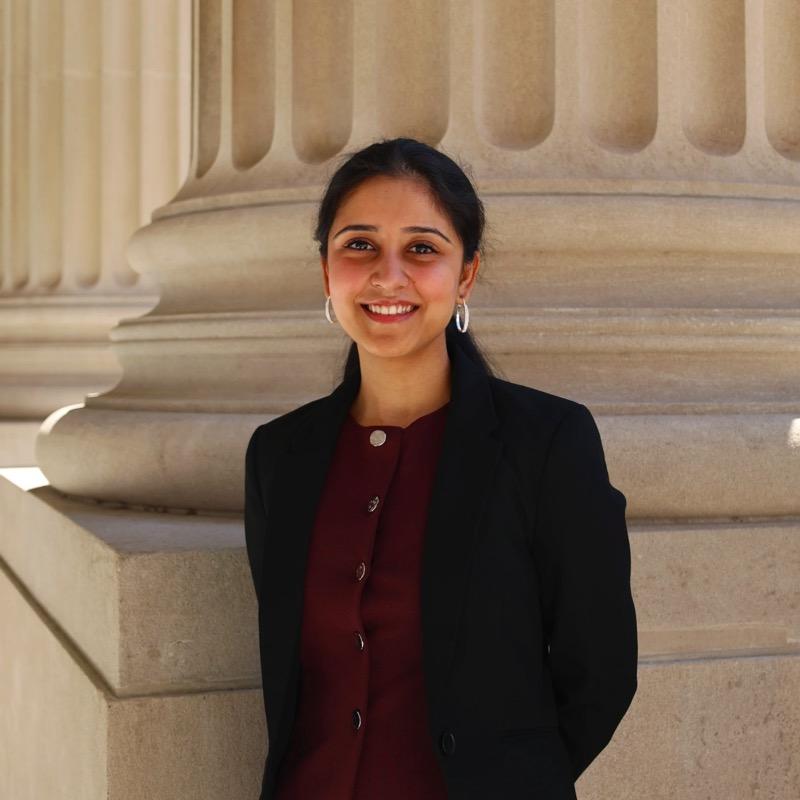
Netra Easwaran · Model UN Coach
Director-General, Yale Model United Nations
Meet the full coaching team on the coaches section.
How enrollment works
- 1
Enroll and pay
Secure checkout takes a minute. Pick the age band and time slot, enter each student’s details, and pay for the term.
- 2
We reach out in 24-48 hours
A coach contacts you to welcome the student, confirm the band and time slot, and answer any questions.
- 3
Placement and first session
We place the student in the right class and send the class link and materials before the first meeting.
Frequently asked questions
What experience does Intermediate I assume?+
Fluency with the rules of procedure and some committee time, either Beginner II or one to two real conferences. Students should be past worrying about motions and points, because this course spends its time on what happens between them.
My child speaks well but never seems to influence committee. Is this the right course?+
Yes, that gap is exactly what Intermediate I targets. Speaking gets a delegate noticed; caucusing, negotiation, and bloc-building are what turn being noticed into shaping the outcome. Those are the skills this term drills.
Does my child need to attend a real conference during the term?+
No. Everything is drilled in simulation within the course. That said, a real conference shortly after the term ends is the ideal place to cash in the skills, and coaches will suggest suitable ones.
How does negotiation practice work online?+
Breakout rooms play the role of hallway huddles. Blocs form, split, and merge in separate rooms while the coach circulates, exactly the way delegates cluster around desks at an in-person conference. Students who train this way tend to find online conferences easy.
Can a student take Intermediate I and 1-on-1 coaching at the same time?+
Yes, and it is a common pairing before a big conference: the group course builds the strategic toolkit while private sessions apply it to a specific committee and country.