Step 1 · Beginner · Ages 10–13 · 14–17
Model UN Course for Beginners
The first course for students completely new to Model United Nations.
- The ladder
- 1. Beginner I
- ·2. Beginner II
- ·3. Intermediate I
- ·4. Intermediate II
- ·5. Advanced I
- ·6. Advanced II
- ·7. Scholars
About this program
Beginner I is where a delegate starts. Over twelve weekend sessions, small groups learn the four things every first conference asks of them: how committee actually runs, how to research a country and build a position, how to write a position paper, and how to stand up and speak under time. Nothing is assumed, and nobody is too old to begin; the High School track exists precisely because plenty of students discover Model UN at fifteen or sixteen. The term ends with a scaffolded mock committee, chaired by a coach who pauses and steers, so a student’s first real committee is never a mystery. From there, Beginner II takes the same fundamentals to full conference pace.
Is this the right fit?
- Who it's for
- Students who have never done Model UN, at any age from 10 to 17 · Middle and high schoolers preparing for a first conference · Delegates who want the fundamentals taught properly, not picked up by osmosis
- Prerequisites
- None. Beginner I assumes zero Model UN experience.
- Where it leads
- Graduates step up to Model UN Beginner II.
Class schedule
Each course offers a Middle School and a High School band, and every band has two weekly slot options, all on weekends. The schedule below displays in your own timezone automatically; the selector lets you view a different one.
Middle School
Ages 10–13One 1.5-hour class per week, 12 weeks
Option BEGINNER-I-MS-AMDXB · Americas + Dubai
Saturdays
11:00 AM – 12:30 PM EDT
Option BEGINNER-I-MS-ASIADXB · Asia + Dubai
Saturdays
6:00 AM – 7:30 AM EDT
High School
Ages 14–17One 2-hour class per week, 12 weeks
Option BEGINNER-I-HS-AMDXB · Americas + Dubai
Saturdays
11:30 AM – 1:30 PM EDT
Option BEGINNER-I-HS-ASIADXB · Asia + Dubai
Saturdays
6:30 AM – 8:30 AM EDT
What students achieve
- ✓Run committee confidently: motions, points, caucuses, and the flow of a session
- ✓Research a country and build a defensible position on any topic
- ✓Write a clean, submission-ready position paper
- ✓Deliver a timed opening speech without reading from a script
- ✓Read a resolution and know what its clauses actually do
- ✓Debate a complete scaffolded mock committee before a real one ever counts
What a session looks like
Every class runs the same loop, so students always know the shape of the session.
- 0:00
Warm-up drill
A short speaking or procedure exercise to open the room and get everyone talking.
- 0:10
The week’s skill
The core lesson, taught with live examples and worked through together.
- 0:45
Guided practice
Students apply the skill in a mini-committee while the coach steers and corrects.
- 1:25
Committee reps
Timed speeches or procedure runs so every student uses the skill under real conditions.
- 1:45
Debrief and feedback
What worked, what to fix, and the one thing to practice before next week.
Curriculum
01What Model UN is
The United Nations in miniature: what a committee is, who the chair and dais are, how a conference weekend runs, and what a delegate is there to do. Everyone speaks in the first session.
02Rules of procedure I
Roll call, setting the agenda, and the speakers’ list: the formal skeleton every committee session hangs on, taught without the jargon.
03Rules of procedure II
Moderated and unmoderated caucus, the motions that open and close them, and the points a delegate can raise: order, personal privilege, and parliamentary inquiry.
04The language of diplomacy
Speaking in the third person, addressing the chair, yielding time, and the formal register that makes a delegate sound like one from the first sentence.
05Researching your country
A repeatable method for finding a country’s real position: government statements, UN voting records, blocs and allies, and the two or three facts that matter for the topic.
06Researching the topic
How to read a background guide properly, what the UN has already done on an issue, and how to turn a pile of sources into one defensible position.
07The position paper
Structure, sourcing, and tone. Students draft a full paper on a live topic, section by section, in class and at home.
08Position paper revision
Every draft comes back with line-by-line written feedback. Students revise to a clean, submission-ready standard they can reuse for any conference.
09The opening speech
A one-minute speech with a shape: hook, position, proposal. Written, timed, delivered, and then delivered again.
10Speaking under pressure
Points of information, yields, and speaking from notes instead of a script. Every student gets multiple timed reps.
11Resolution basics
The anatomy of a resolution: preambulatory and operative clauses, sponsors and signatories. Students mark up a real UN resolution and draft their first clauses.
12Scaffolded mock committee
A full simulated session on a real topic. The coach chairs, pauses, and steers, so every student debates a complete committee before one ever counts.
What's included
- ✓Twelve live small-group sessions with a dedicated coach
- ✓Written feedback after every session
- ✓A position paper reviewed with line edits
- ✓Printable rules-of-procedure and speech-planning sheets from our resource library
- ✓A scaffolded mock committee to close the term
- ✓A written placement note for Beginner II
Who teaches it
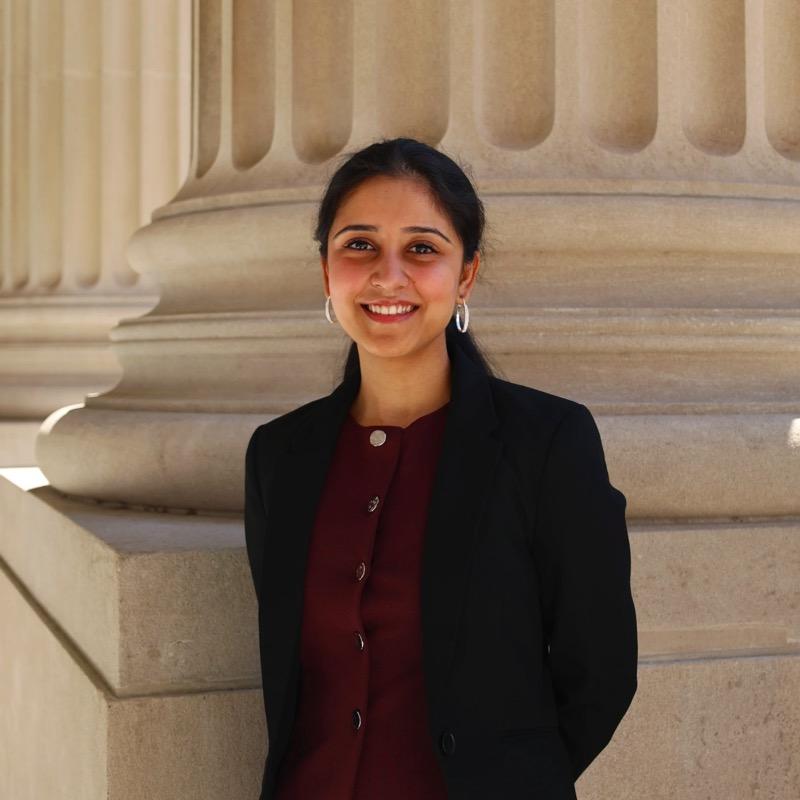
Netra Easwaran · Model UN Coach
Director-General, Yale Model United Nations
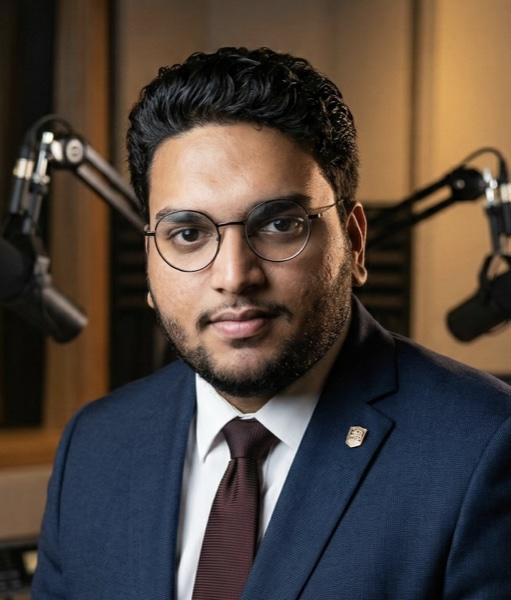
Amaan Ibrahim · Model UN & Public Speaking Coach
Six-time TEDx speaker
Meet the full coaching team on the coaches section.
How enrollment works
- 1
Enroll and pay
Secure checkout takes a minute. Pick the age band and time slot, enter each student’s details, and pay for the term.
- 2
We reach out in 24-48 hours
A coach contacts you to welcome the student, confirm the band and time slot, and answer any questions.
- 3
Placement and first session
We place the student in the right class and send the class link and materials before the first meeting.
Frequently asked questions
Does my child need any Model UN experience to join Beginner I?+
No. Beginner I assumes zero experience. Every rule, every skill, and every piece of vocabulary is taught from the beginning, and the course is built for students attending their first conferences.
Is Beginner I too basic for a 15- or 16-year-old who is just starting?+
No. Starting Model UN in high school is completely normal, and the High School track is built for it: the same fundamentals, taught in an older cohort at an older pace, with topics and examples chosen for teenagers, not ten-year-olds.
What is the difference between the Middle School and High School tracks?+
The curriculum is the same; the cohort and pace are not. Middle School (ages 10–13) runs 1.5-hour sessions; High School (ages 14–17) runs 2-hour sessions with more committee time and harder topics. Students are always grouped with their own age band.
What does my child need for the online classes?+
A laptop or desktop with a camera and microphone, a stable connection, and somewhere reasonably quiet. All materials are provided digitally, and the worksheets are printable if your student prefers paper.
My child is nervous about public speaking. Will they cope?+
That nervousness is exactly what the course is designed around. Speaking practice is structured, repeated, and low-stakes: short drills in a small group of 6–10, every single week. Most students find the fear fades once speaking becomes routine rather than an event.